Ethiopia is where coffee began. Legend tells of a goat herder named Kaldi who discovered his goats dancing after eating red berries from a certain tree. But the story of Ethiopian coffee is more than just a legend; it is a complex tapestry of genetics, geography, and ancient tradition that continues to define the world of specialty coffee.
The Legend of Kaldi: Where It All Started
Around 850 AD, in the highland forests of Kaffa, a young goat herder named Kaldi noticed something strange. His goats, usually calm, were jumping and dancing with unusual energy after eating red berries from a particular shrub. Curious, Kaldi tried the berries himself and felt a rush of alertness.
He rushed to a nearby monastery to share his discovery. The monks, fearing the devil's work, threw the berries into the fire. But as the beans roasted, the magnificent aroma of fresh coffee filled the room. The monks raked the roasted beans from the embers, ground them, and dissolved them in hot water. The world's first cup of coffee was born.
The Mystery of "Heirloom" Varieties
If you look at a bag of coffee from Brazil or Colombia, it will likely specify the variety: Bourbon, Caturra, or Geisha. But pick up a bag of Ethiopian coffee, and you will often see a single, mysterious word: "Heirloom."
This is because Ethiopia is the botanical home of Coffea arabica. While other countries have a handful of varieties introduced by humans, Ethiopia has thousands of wild varieties growing naturally in its forests. Many have not even been genetically classified yet.
Coffee here is often categorized as:
- Forest Coffee: Wild coffee trees growing in natural forests with no human intervention.
- Garden Coffee: Coffee trees grown in the backyards of smallholder farmers alongside other crops.
This genetic diversity is why Ethiopian coffee is so complex and impossible to replicate elsewhere. You aren't just drinking a "variety"; you are drinking a chaotic, beautiful mix of ancient genetics.
Washed vs. Natural: Two Sides of the Same Coin
In Ethiopia, the processing method is not just a technical detail—it defines the soul of the coffee. The same bean can taste completely different depending on how it is processed.
1. Washed Process (The Tea-Like Elegance)
Common in regions like Yirgacheffe. The fruit flesh is removed before drying.
Profile: Incredibly clean, floral (jasmine), citrusy (lemon/bergamot), and light-bodied. It often drinks more like a fine Earl Grey tea than a traditional heavy coffee.
2. Natural Process (The Fruit Bomb)
Common in regions like Harrar and Guji. The whole coffee cherry is dried in the sun on raised beds before the fruit is removed.
Profile: Intense sweetness, heavy body, and explosive fruit notes. Think blueberry jam, ripe strawberries, and even wine-like fermentation funk.
If you like clarity and acidity, go for Washed Yirgacheffe. If you want a sweet, fruity adventure, try a Natural Guji.
Famous Ethiopian Regions
- Yirgacheffe: The "Champagne" of coffee. Floral, delicate, and citrusy.
- Sidamo: The mother region. Balanced, spicy, with notes of lemon and stone fruit.
- Guji: The modern favorite. Complex, sweet, and often distinctly fruity.
- Harrar: The wild child. Ancient, dry-processed, with bold blueberry and dark chocolate notes.
The Ethiopian Coffee Ceremony (Buna)
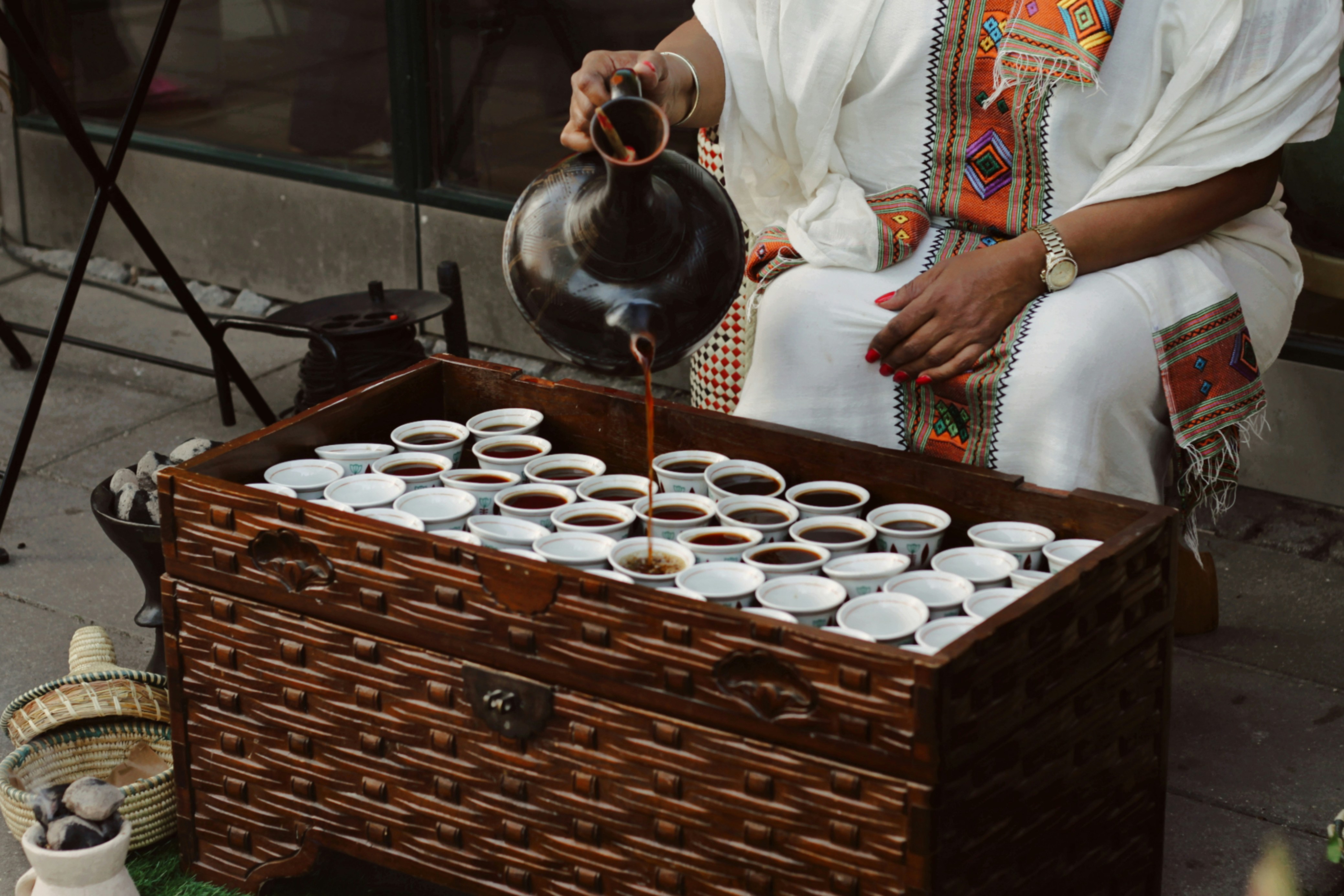
In the West, coffee is a "grab-and-go" fuel. In Ethiopia, it is a slow, sacred ritual known as the Buna Ceremony. If you are invited to one, it is a sign of deep friendship and respect.
The ceremony is a sensory experience:
- The room is filled with the smoke of burning Frankincense.
- The host (usually the woman of the house) roasts fresh green beans over charcoal until they shine with oil.
- She walks around the room so guests can inhale the aroma.
- The coffee is brewed in a clay pot called a Jebena.
Three cups are served to each guest, each with a name and meaning:
- Abol (The First Cup): The strongest, for pleasure.
- Tona (The Second Cup): To provoke thought.
- Baraka (The Third Cup): The "Blessing." To leave before this cup is considered rude.
Understanding the Grade (ECX System)
When buying Ethiopian coffee, you might see "Grade 1" or "Grade 2." This classification comes from the Ethiopian Commodity Exchange (ECX) and refers to the number of physical defects in the green beans.
- Grade 1 & 2: Specialty Grade. Very few defects. Highest flavor clarity.
- Grade 3-9: Commercial Grade.
For the best experience, always look for Grade 1 or Grade 2 beans.
"In Ethiopia, coffee is not just a drink — it is a vehicle for peace, a reason to gather, and a blessing to be shared."